
Longridge Fell
Longridge Fell is one of those Ribble Valley walks that feels bigger than the map suggests, with woodland tracks, steady climbing and wide-open views once you reach the top. This 12.7 km loop starts and finishes in Hurst Green, taking in quiet lanes, the edge of Stonyhurst College, the shaded paths through Deer House Wood and the long pull up onto the fell itself. It’s a moderate walk with around 325 metres of ascent, but the gradients are kind for the most part, and the reward is a cracking high-level stretch with plenty of room to stop, breathe and look right across the Ribble Valley.
Longridge Fell from Hurst Green
I set off from Hurst Green, one of the prettiest villages in this part of Lancashire and a lovely place to begin any walk. There’s a calmness to it early on, with stone houses, quiet roads and that familiar Ribble Valley mix of farmland and woodland all around. The route leaves the village gently, passing near Stonyhurst College, whose grand buildings always give this opening section a bit of character before the walk heads properly into the trees.
From there, the route begins to feel more enclosed as it moves towards Deer House Wood. This is a good way to ease into the climb, with soft woodland light, birdsong and a nice sense of leaving the village behind. It’s not dramatic walking at this stage, but it’s peaceful and steady, and it sets up the fell nicely.
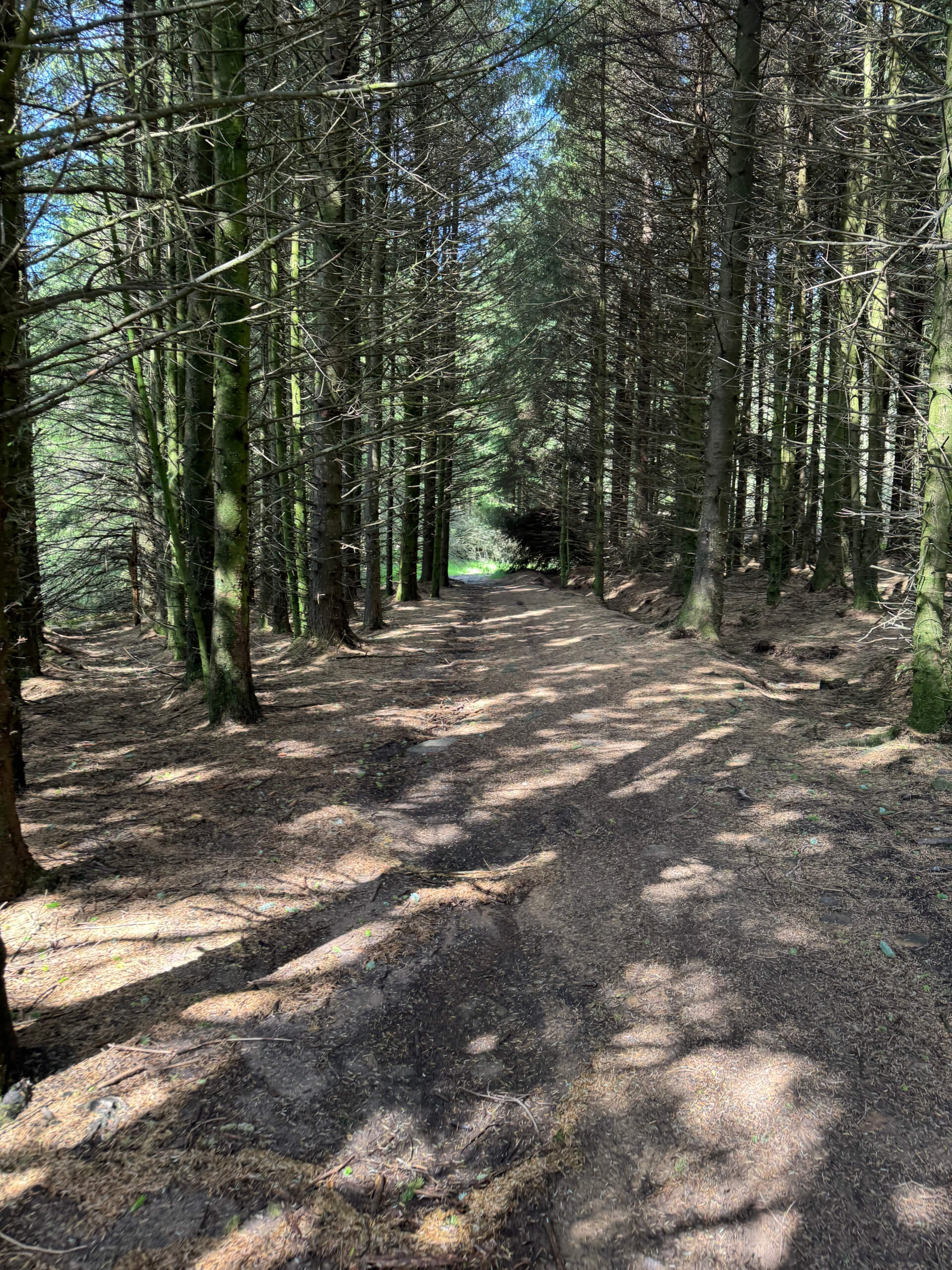
The paths through the woods are straightforward and easy to follow, though after wet weather they can be a bit muddy in places. Even so, it’s the sort of section I always enjoy, proper sheltered woodland walking before the landscape opens out. If you like a route that builds gradually rather than throwing the hardest climb at you straight away, this one gets the balance right.
The climb onto Longridge Fell
The real work starts as the route leaves the woods and begins the climb onto Longridge Fell. It’s not especially steep, but it is sustained enough to make you feel like you’ve earned the higher ground. The transition from woodland to open fell is one of the best parts of the day, with the trees dropping away behind you and the views starting to widen with every step.
Once up on the fell, a network of forestry roads makes the route fairly uncomplicated underfoot. These broad tracks don’t always have the romance of a narrow moorland path, but they do let you settle into a rhythm and enjoy the surroundings without too much route-finding. On a breezy day up here, you really notice how exposed the top feels compared with the sheltered start in Hurst Green.
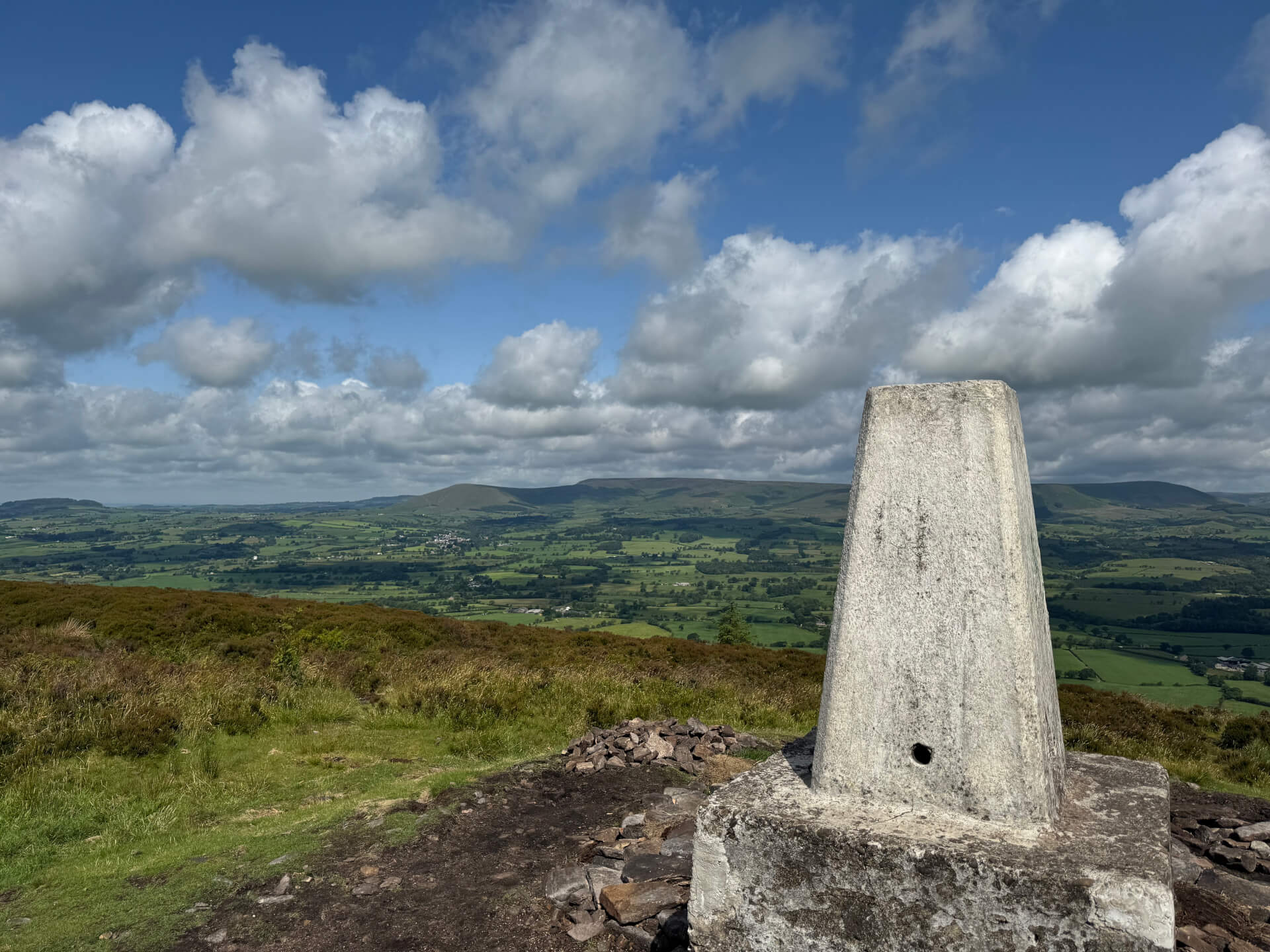
The higher you get, the more the open views begin to dominate the walk. Looking out across the Ribble Valley, with fields, woods and villages laid out below, it’s easy to see why Longridge Fell is such a reliable choice when you want a walk that gives plenty back for a moderate effort. On a clear day, the distant hills begin to stack up on the horizon, and there’s every excuse to slow the pace and take it in.
Views from the top and a good lunch stop
Near the top of Longridge Fell, there are a few good spots to pause, and this is exactly the kind of walk where a proper lunch stop makes sense. I found a sheltered place near the highest ground and stopped there for a while, with the valley stretching out below and enough of a breeze to remind me I’d climbed out of the trees for a reason. It’s not a summit in the dramatic mountain sense, but it has that same satisfying feeling of space and perspective.
This upper section is probably my favourite part of the route. After the gradual build through Hurst Green and Deer House Wood, and the steady climb on the forestry tracks, the top feels like a reward rather than a checkpoint. The walking is easy enough here to simply enjoy being up high, and the views give the whole route a bigger feel than you might expect from the numbers alone.
If you’re doing this walk in decent weather, it’s worth allowing a bit of extra time at the top rather than rushing on. Longridge Fell isn’t about technical ground or dramatic scrambles, it’s about a well-paced day out, varied scenery and that lovely contrast between woodland, managed forest and open fell. The lunch stop is part of the appeal.
The return loop back to Hurst Green
From the top, the route begins its return loop back to the village, descending gradually away from the higher ground. This section keeps things interesting by avoiding a simple out-and-back, and it gives a different perspective on the fell as you start to drop back towards lower fields and lanes. The forestry roads continue for a while, making for easy walking and a gentle comedown after the climb.
As the route loses height, the landscape softens again and the walk starts to feel more rural than wild. The shift back towards farmland and the outskirts of Hurst Green is a pleasant one, especially after spending time on the exposed top. It’s a route with a nice sense of progression, village, woods, fell, views, then a steady unwinding back down.
By the time I returned to Hurst Green, it felt like a complete loop in the best sense, varied, scenic and just the right length for a half-day or relaxed day out in the Ribble Valley. For anyone after a moderate walk with a bit of woodland, a proper climb and rewarding views from the top, Longridge Fell is an easy one to recommend.
Comments
No comments yet. Be the first!
Leave a comment