
Tolkien Trail (Long Version)
Tolkien Trail is one of the best longer walks in the Ribble Valley if you fancy a full day out with a proper mix of woodland climbing, open fell and riverside wandering. Starting in Hurst Green, this version stretches the classic route out into a tougher circuit by heading up through Deer House Wood to Longridge Fell before dropping back towards the River Hodder and rejoining the well-loved Tolkien Trail. It’s a hard walk rather than a technical one, but with 20.1 km to cover and plenty of climbing along the way, it’s one to save for a decent weather window and a day when your legs are feeling willing.
Tolkien Trail difficulty notes
I’d class the Tolkien Trail as a hard hike, mainly because of the distance and the amount of ascent packed into the day. At around 20.1 km with roughly 2050 m of elevation gain, it’s a route that asks a fair bit more of you than the shorter riverside wander many people know by name. The climbing up through Deer House Wood and onto Longridge Fell is where you really feel it, especially if the ground is wet or you’ve started off a bit too enthusiastically.
That said, the terrain itself is mostly straightforward. You’re dealing with a combination of woodland paths, farm tracks, fellside trails and riverside sections rather than anything scrambly or exposed. Good boots are still a must, especially after rain, as some stretches can turn muddy and slippery. If you’re comfortable with a solid 5–6 hours on the hill and you don’t mind a sustained climb early on, the Tolkien Trail makes for a cracking day in the Ribble Valley.
The Tolkien Trail route from Hurst Green
The walk begins in Hurst Green, one of those Ribble Valley villages that always feels like a fitting place to set off from. There’s a timeless feel here, with the old stone buildings and the sense that the countryside starts properly the moment you leave the road behind. From the village, the route heads out towards Deer House Wood, where the first proper climbing begins.
This early section is a good warm-up and a bit of a wake-up call all at once. The path rises steadily through the trees, and depending on the season, it can feel either wonderfully shaded or properly claggy underfoot. It’s a lovely stretch though, and one of the things I like most about the Tolkien Trail is how it strings different moods of landscape together. You start enclosed by woodland, working uphill at a steady plod, before the route gradually opens out as you make your way towards Longridge Fell.
Once you gain the higher ground, the character of the walk changes. The enclosed, earthy feel of the woods gives way to broader views and more open walking, and it’s here that the route starts to feel like a proper long day out rather than just a local ramble. 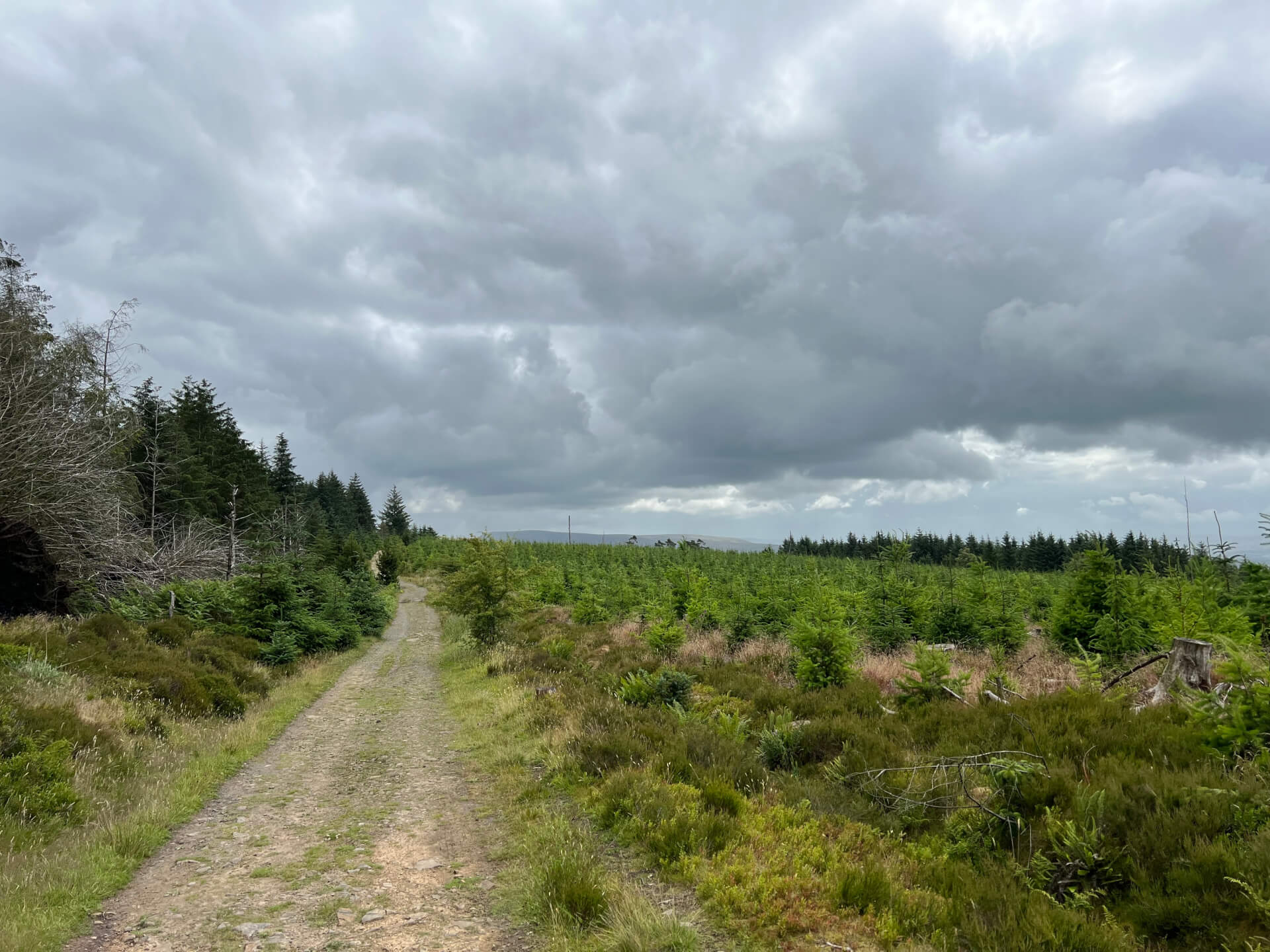
Longridge Fell and the high ground
The climb onto Longridge Fell is the part that gives this walk its bite. It’s not especially dramatic in a mountain sense, but it’s enough to make you earn the views, and on a clear day the payoff is well worth it. Looking out across the Ribble Valley, you get that brilliant contrast between the soft patchwork farmland below and the rougher, more open ground you’ve just climbed onto.
This is the section where it pays to settle into your own pace. There’s no point tearing up the climb and blowing your legs before the second half of the route. I’ve always found this part of the Tolkien Trail best enjoyed with a bit of patience, stop now and then, turn round, and take in how far you’ve already come. In decent conditions, the fellside walking is a real pleasure, with enough space and openness to make the route feel adventurous without ever being intimidating.
Navigation is usually manageable, but as with any open country, poor visibility can make things feel more awkward than they ought to. A map or GPX is well worth having, especially if it’s your first time out this way. The weather can change the feel of Longridge Fell completely, turning a grand open stretch into a bit of a slog if low cloud or driving rain rolls in.
Returning via the River Hodder
After the higher ground, the route gradually eases back down towards the River Hodder, and this change of scene is one of the best things about the walk. There’s something satisfying about leaving the fell behind and picking up the gentler rhythm of the valley again. The riverside sections bring a calmer feel to the day, with quieter paths, old bridges and that unmistakable Ribble Valley mix of water, pasture and mature woodland.
This latter part of the Tolkien Trail ties back into the route most walkers recognise, and it’s easy to see why it’s so popular. The scenery here has a softer, more storybook quality to it, which suits the Tolkien connection nicely without needing to labour the point. It’s the kind of countryside that invites you to slow down a touch, especially once the biggest climbing is behind you.
By the time you’re following the Hodder and making your way back towards Hurst Green, the route feels nicely balanced. You’ve had the harder effort on the climb and the fell, and the return gives you a more relaxed finish without ever becoming dull. For me, that’s what makes the Tolkien Trail such a satisfying circuit, it feels like a proper journey rather than a walk that peaks too early.
What to expect on the Tolkien Trail
If you’re planning this walk, I’d allow 5–6 hours, though that can easily stretch longer if you stop for photos, lunch or a bit of dawdling by the river. It’s the sort of route where conditions make a big difference. In dry weather, it’s a long but very enjoyable outing. After heavy rain, some of the woodland and riverside stretches can be muddy, and the climb can feel more demanding than the numbers suggest.
The best approach is to come prepared for a full day: decent boots, waterproofs, snacks and enough water to see you through the climb onto Longridge Fell. If you like varied walks and don’t mind putting the effort in, the Tolkien Trail is one of the most rewarding hikes in the Ribble Valley. It combines some of the area’s best features into one route, a characterful village start, woodland ascent, open fell and a lovely finish by the River Hodder, and that makes it far more memorable than your average out-and-back.
For anyone wanting to explore more of this corner of Lancashire, Hurst Green is also a good base for other walks in the area, and the wider Ribble Valley has no shortage of options. You can find more local routes over on Northern Hiker, but if you’re after one walk that really shows off the variety of the landscape, the Tolkien Trail is a cracking place to start.
Comments
No comments yet. Be the first!
Leave a comment